Libertarians dream of a laissez-faire capitalist nation, one with minimal government regulation and lots of entrepreneurs. There are many reasons why this goal is difficult to achieve; however, one reason is inherent in capitalism itself. As soon as a business gets large enough to have some spare cash, it might use that spare cash to obtain favors from government.
Of course, I am not the first person to discover this. For example, the plot of Ayn Rand’s Atlas Shrugged focuses less on the evils of the welfare state than on the efforts of a well-connected steel company (Orren Boyle’s Associated Steel) to use government to squash competition from Rearden Steel.
Peter Norton’s book Fighting Traffic shows how automobile-oriented street rules are at least partially a result of similar special interest manipulation. In the early 1920s, auto sales suffered because of urban traffic congestion and bad public relations related to the death toll from automobiles running over pedestrians. The auto industry and related groups such as road-builders and tire companies (or as Norton calls these groups, “motordom”) responded in three ways.
First, motordom hijacked the safety issue by blaming the victim. Car companies claimed that pedestrian deaths were the result of something called “jaywalking” (i.e., pedestrians using the streets as they had always used them, rather than waiting for automobile traffic to take its turn). In addition to financing a public relations campaign against jaywalking, motordom encouraged cities to enact anti-jaywalking ordinances.
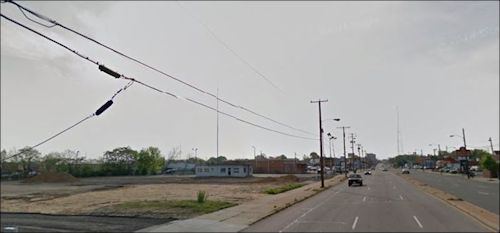
Second, motordom lobbied government to reconstruct American streets in ways that favored fast car traffic, and even created its own “experts” to lobby city officials. A Los Angeles auto club hired Miller McClintock, a Harvard graduate student, as a consultant. Before being hired by the car lobby, McClintock wrote that widening streets would merely attract more traffic. After going on the motordom payroll, McClintock endorsed wider streets and fining jaywalkers. Car companies then hired McClintock to establish a foundation that taught engineers how to design cities for cars. The motordom-subsidized engineers then went to work in cities throughout the country, creating the sort of streets that infest cities today: wide streets where traffic flows at speeds fatal to pedestrians. Continue reading
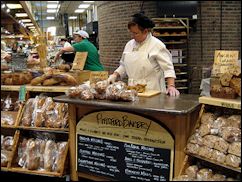 Can Tysons have its cake and eat it, too? Perhaps not, at least if the cake is baked in a Wegmans Food Market bakery. Discussions to bring the Rochester, N.Y.-based grocery chain to a transit-oriented development around the McLean Metro station have ended in frustration, reports the Washington Post.