The First to Join the Luddite Parade

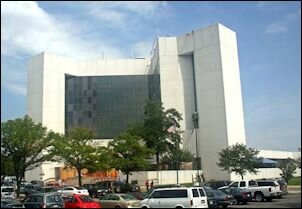
DMV headquarters -- just doing its job... of snuffing out innovation.

DMV headquarters — just doing its job… of snuffing out innovation.

by James A. Bacon

Upstart transportation companies Uber and Lyft, which link drivers and passengers by means of a smart phone, have run into resistance from taxicab companies and municipal regulators around the country. But Virginia is the first state to crack down on the two companies, contends Ken Cuccinelli, former attorney general, in a Sunday op-ed in theRichmond Times-Dispatch. That fact should give pause, he suggests, to anyone who fantasizes about Virginia staying in the vanguard of technological progress.

“For all the talk in my home state about being an innovative and inviting place to do business, when the rubber meets the road — literally in this case — it doesn’t always play out that way,” Cuccinelli writes. “Virginia holds the dubious distinction of being the first entire state to join the Luddite parade.”

Remarkably, while the Virginia code permits automobile ride-sharing it does so only for “those which do not involve transporting passengers for profit.” Earlier this month the Department of Motor Vehicles issued cease-and-desist letters against Uber and Lyft to halt their “illegal” operations until state law is modified and urged them to participate in a study group that will issue a report before the 2015 General Assembly session. The two companies assert that they are operating legally and have refused to shut down their Virginia operations. Continue reading
Local Government Sales Tax

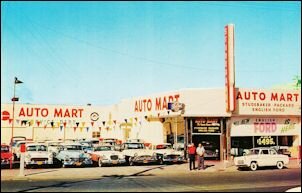
auto dealershipby Charles Marohn

Unless you are a modern day Istanbul and sit at the crossroads of trade and commerce with the ability to skim margins off the goods flowing through your community, why would a city rely heavily on the sales tax? The only reason is that it is easy. Unfortunately, for building a strong town, easy is not always productive.

The sales tax does a number of destructive things to your community, the worst of which is the way it devalues residential properties, and people in general, except in their role as consumers.

For the local government financing itself with sales tax, there are mostly negative financial implications from residential and other non-retail development. A new residence simply costs money. Same with a new office building. At best, they are loss-leaders in an effort to secure more sales tax revenue, although there is no way to track return-on-investment or correlate revenues with expenses.

The sales tax fails to align the interests of a local government and its residents, putting them in tension with one another. The optimum outcome for a local government reliant on the sales tax is for residents to spend their money prolifically then, when they run out, borrow money to spend more. Then, when the household is completely broke, move out of the community and make way for someone else who will spend more. Continue reading

What We’re Reading — Commercial Real Estate

by Alison Berry

This week, we released out our RESTORE report, which focuses on mixed-use and commercial real estate in the rocky mountain west. Here’s a bit more about commercial real estate:

commercial real estate

  • Businesses in Memphis are benefiting from pedestrian and cycling paths
  • Check out these haunting photos of some of America’s Abandoned Shopping Malls
  • A new development from our Master Builder, Jed Selby

Our new program, New Mobility West helps create strong communities through transportation solutions. We’re also thinking about transportation: Continue reading

U.S. 460: Peeling Back the Onion

peeling_onionby James A. Bacon

Structuring the U.S. 460 Connector as a public-private partnership (P3) shielded the $1.4 billion project from much of the oversight required for conventional Virginia Department of Transportation (VDOT) projects, found a confidential report by VDOT’s Assurance Compliance Division and the Office of the State Inspector General.

As a consequence, the McDonnell administration was able to pursue a “very aggressive or extremely aggressive” schedule for advancing the project without informing the Commonwealth Transportation Board (CTB) or the general public of major regulatory issues that threatened the project’s viability. Due to concerns over the impact on nearly 500 acres of wetlands, the U.S. Army Corps of Engineers had balked on issuing needed environmental permits. Even so, VDOT paid $250 million to the design-build contractor, US Mobility Partners, under the terms of the contract.

“This action may have placed additional permitting risks and associated schedule risk on taxpayers of the commonwealth of Virginia,” states the confidential, 54-page report obtained by the Richmond Times-Dispatch.

Secretary of Transportation Aubrey Layne, appointed by Governor Terry McAuliffe, suspended the project early this year until the permitting issues could be resolved. He said the state potentially could be exposed to $500 million in losses. VDOT is examining alternative routes for the project that the Army Corps might find more acceptable. Continue reading

D.C. Streetcar: Worse than Nothing

dc_streetcar

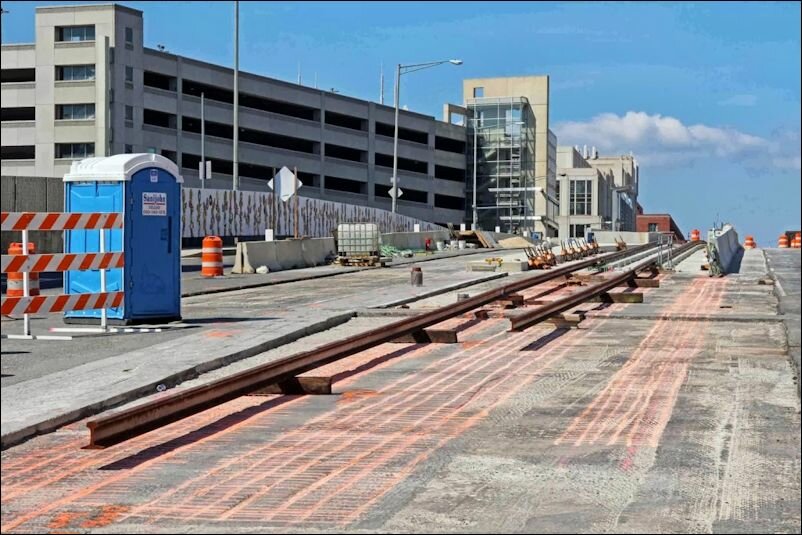
Passengers coming from Union Station will board the streetcar on an overpass next to a parking garage. Image via Fullertography.

by Emily Washington

On Tuesday, DC’s city council passed a tax reform package that will cut funding for future streetcar construction. These cuts come as the H Street streetcar delays continue to mount, and much of the commentary supporting the streetcar has shifted from touting its transportation benefits to its economic development role. As Stephen has explained, the benefits of streetcar over bus depend heavily on streetcars having dedicated lanes, which most of DC’s streetcars wouldn’t have.

Earlier this spring, I was in a bike accident that cemented my opposition to DC’s streetcar. Because the streetcar tracks cover the right two-thirds of H Street’s right-hand lanes, bicyclists typically ride between the two tracks. This creates a situation in which the sudden need to swerve or a brief loss of concentration puts cyclists at a risk of catching their front tire in the track, causing an over-the-handlebars accident when the front wheel comes to a sudden stop. In Toronto, streetcar tracks are a factor in nearly one-third of serious bicycle accidents. While I can say I’ll now go to great lengths to avoid riding on H Street, DC’s lack of good east-west bike routes make it unrealistic to expect all cyclists to avoid the streetcar tracks. Avoiding tracks will be much more difficult for cyclists under DDOT’s plan to eventually construct 22 miles of tracks. Continue reading

From Strip Malls to Mixed Use

1201 in downtown Durango, Colorado

by Tom Boyd

An in-depth study released today by Community Builders, a project of the Sonoran Institute, shows how commercial real estate in the American West is trending away from single-use malls on the outskirts of town and toward smaller shops and a complete shopping “experience” in town centers.

The study, called RESTORE: Commercial and Mixed-use Development Trends in the Rocky Mountain West is a follow-up to Community Builders’ 2013 study, RESET: Assessing Future Housing Markets in the Rocky Mountain West, which found that 90 percent of survey respondents would prefer living within an easy walk to other places in the community.

“When it comes to commercial real estate in the American West today, the hot spot to be is on the corner of downtown Main Street, right in the heart of town, preferably in an area with a mix of housing, office and retail,” said Clark Anderson of Community Builders, which has offices in Glenwood Springs and Bozeman, Montana. “The strip mall isn’t dead, but we’re seeing retailers trying to adapt in an era when e-commerce has taken off and when people do go out to shop, they want a richer experience.” Continue reading

Commercial Market Analysis of the Intermountain West

Hotel McCall, Idahoby Tom Boyd

If the dark, early days of the Internet are defined by the weird screeching sound of a dial-up modem, the current Internet age can probably be defined by the sound of a cash register pinging up yet another sale.

During the transformation from dial-up to broadband, the online retailer Amazon has become one of the biggest companies in the world, more than two-thirds of Internet users in the US say they have made a purchase online, and 68 percent of internet users say that using the Internet saves them time.

This may send a shiver of fear up the spine of your local brick-and-mortar shop manager, but rather than going off gently into that good night, retailers are finding that shoppers still love to shop … it’s just that now, rather than an in-and-out purchasing experience, more shoppers in key demographics are seeking a complete shopping experience.

This is where the “quick-and-easy” part of the Internet comes in. Today’s shoppers aren’t there to quickly pick something up and hit the road – they’re shopping with family and friends to make a fun day of it. Retailers, in turn, are seeking locations that can offer multiple activities, preferably in an area with a mix of housing, office and retail. Continue reading