The Case Against Jaywalking Laws, Part 2

by Michael Lewyn

Some months ago, I wrote that laws against so-called “jaywalking” (that is, crossing in places other than crosswalks or where traffic lights encourage pedestrians to cross) fail to promote safety, because traffic lights are inadequate guides to safety. When crossing midblock, a pedestrian need only watch out for traffic coming in one direction—right toward her. By contrast, when crossing at a light, a pedestrian may be in less danger from cars coming straight at him, but may be attacked by cars making left and right turns. Moreover, it is not at all clear that jaywalking is a major cause of pedestrian fatalities; although most crashes do occur outside intersections, these crashes often occur in places where there is no easily available crosswalk. According to traffic writer Tom Vanderbilt, “While jaywalking is often cited as a cause of pedestrian accidents, less than 20 percent of fatalities occurred where a pedestrian was crossing outside an easily available crosswalk.” And even where a pedestrian is jaywalking, a crash may be caused primarily by driver misconduct.

However, my article did not fully address the social harms caused by these laws. I did mention that to the extent these laws discourage walking, they increase traffic danger, because more cars mean more potential crashes.

But even if this were not the case, the social benefits of jaywalking laws might be outweighed from their costs. In particular, jaywalking laws are harmful from a public health perspective, a social equity perspective, and a libertarian perspective.

The public health costs from increased driving have been amply discussed in smart growth literature. But just to summarize the key issue, when we drive instead of walk, we create two major types of public health risks. First, we harm ourselves. Less walking means less exercise, which means an elevated risk of many diseases; for example, the risk of type 2 diabetes is 31 percent lower for participants who engaged in regular moderate-intensity physical activity such as walking. Second, people who drive more and walk less endanger the rest of society. Even leaving aside the risks of climate change, particulate matter and other pollutants emitted from motor vehicles create significant costs. For example, one study found that particulate matter emitted from motor vehicles creates $211.6 million of health care costs in Auckland, New Zealand, alone. So, to the extent jaywalking laws reduce walking, they create increased risks of harm for both their intended beneficiaries and for society as a whole. Continue reading
Cars Are Expensive (And Other Things The Census Taught Me)

by Michael Lewyn

I just learned that national tables from the 2013 American Household Survey (AHS) are public. These tables contained a variety of information that I thought was at least mildly interesting. To name a few items:

  • Cars are really expensive—even when gas is cheap. The average household spent $800 per month on car-related costs. (Table S-04C). Only $200 of this sum was on gasoline—which means that even if gas was free, cars would still cost $600 per month. About half of household spending was for car payments, 15 percent was for insurance, and the rest was split between parking and maintenance.
  • Single family housing dominates the landscape. Sixty-four percent of all occupied housing units (and 62 percent of units built over the last several years) are detached single-family houses (Table C-01). This is especially true for owner-occupied units: even in central cities, 79 percent of owner-occupied units are detached houses (Table C-01-00).
  • Most single-family housing is not dense enough to support public transit. The average owner-occupied housing unit takes up 0.3 acres, as does the average housing unit built in the last several years. Thus, most blocks probably contain about three or four units per acre; basic bus service requires at least seven units per acre to be economically viable. (Table C-02). Continue reading

Uh, Oh, Maybe We Haven’t Reached “Peak Car”

moving_average

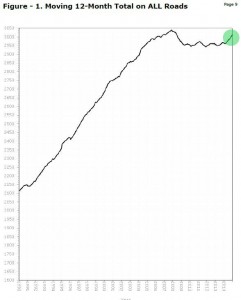
Click for more legible image.

by James A. Bacon

Proponents of Smart Growth, of whom I am one, have been arguing for several years that Americans embarked upon a fundamental shift in driving habits beginning in the mid-2000s. So marked was the decline in Vehicle Miles Traveled (VMT) that a certain triumphalism set in — the drop in driving signaled a shift back to mass transit and walkable urbanism. To be sure, some of the downturn could be attributed to the slow economy, but profound changes in values — a rejection of auto-centric development — was taking root. Some commentators went so far as to proclaim that America had reached “peak car,” and predicted that VMT per capita would continue to decline.

Well, the Federal Highway Administration has reported the latest numbers for 2014, and that triumphalism doesn’t seem quite as justified as it did a couple of years ago. Cumulative travel (measured by the moving 12-month average of Vehicle Miles Driven) increased 1.7% last year, bringing the total travel to a point just shy of the record in 2007. Even more worrisome, drivers were really on a tear at the end of the year. Traffic volume in December increased by 5% compared to the same month the year before.

I haven’t seen how other Smart Growthers have spun this data, and they may have interpretations that confirm their conviction that a big re-set is occurring in human settlement patterns. But I regard the data as grounds for re-examining some of my long-held beliefs — not to change them necessarily, but to go back and take a fresh look and see if they still hold up. Continue reading

Suburban Multifamily: Smart Growth or Smart Sprawl?

In a recent article in the Columbia Journal of Environmental Law, law student Paige Pavone criticizes suburban apartments and condominiums as “green sprawl” because they “merely add density to suburban sprawl and exacerbate the very problems smart growth seeks to correct.” She explains that without public infrastructure to support walking and biking, these developments merely entice more people into car-dependent suburbia, and therefore should not be entitled to density bonuses and other incentives that a state might use to encourage smart growth. In particular, she claims that such “High-Density Islands” are cut off from “communities, local governments, nature, public transportation, and sidewalks.”

Is this critique fair? Somewhat.

Pavone examined a variety of suburban multifamily developments, but focuses on Reading Woods, in Reading, Massachusetts, a suburb of Boston. She claims that Reading Woods residents “cannot walk to the public library, a bank, or a grocery store” and would have to cross I-95 to reach a chain restaurant. So I decided to look at Reading Woods on Google Street View and see how horrible it is.

First of all, I looked for sidewalks. The main street serving Reading Woods is Jacob Way. Jacob Way generally has sidewalks, as does Augustus Court (the main street serving the part of Reading Woods further away from South). So it seems to me that a resident of Reading Woods can use sidewalks for most visits to South Street and other neighborhood streets. To reach Main Street (the neighborhood’s main commercial street) you must walk briefly on South Street, which also has a sidewalk (though it only serves one side of the street, and looks pretty narrow). Continue reading

Measuring Automobile Dependency

auto_dependency2

Rank is among 794 locations for which there is data.

Fascinating data from Governing magazine comparing auto dependency of various municipalities around the United States: Arlington, Alexandria and the City of Richmond led the pack in Virginia as the least auto-dependent, with Norfolk, Lynchburg and Roanoke close behind.

There are two main variables affecting automobile dependency: income and availability of transportation alternatives. Continue reading

Smooth Ride Ahead for Uber, Lyft in Virginia

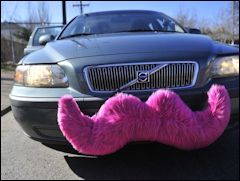
Is that a smile I see under that Lyft mustache?

Is that a smile I see under that Lyft mustache?

It looks like Uber and Lyft will be a permanent part of the Virginia transportation landscape. Legislation essentially legalizing the two ride-for-hire companies has passed both houses of the General Assembly, and Governor Terry McAuliffe has indicated his willingness to sign the bill.

The legislation proposes entirely reasonable regulations that will allow the transportation-network companies (TNCs) to preserve their business models intact, while providing basic protections for riders. Companies must ensure that all drivers are at least 21 years old and properly licensed, and have been screened for criminal backgrounds and sex offenses. Drivers convicted of driving under the influence or other moving violations would be disqualified. Additionally, drivers are required to maintain an $1 million in liability insurance.

Far from putting a damper on the emerging industry, the regulations could legitimize Uber and Lyft in the minds of consumers. At the same time, the new rules are not so onerous that they would discourage competitors from entering the market. This is a victory for everyone.

“The legislation … provides the perfect balance of public safety measures while fostering innovation,” said Del. Tim Hugo, R-Centreville, a co-patron. “Improving transportation for Virginians takes more than just building infrastructure; it requires us to embrace new technology to better meet citizens’ transportation needs.”

Hugo has it exactly right. Continue reading

Henrico Still Building Schlock

west_broad_marketplace

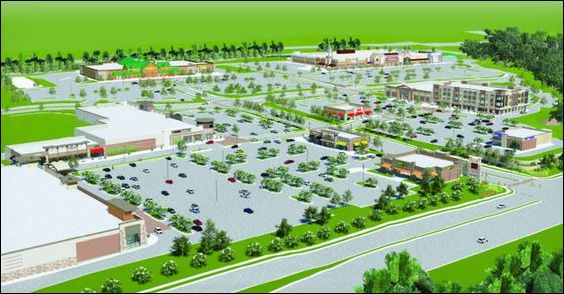
Artist’s rendering of West Broad Marketplace

by James A. Bacon

The developer of the West Broad Marketplace, which will bring a Wegmans grocery store and outdoor gear retailer Cabela’s to western Henrico County, promises Richmonders a shopping treat that “I don’t think you’ve experienced before.” That may be true. Unfortunately, Jack Waghorn, president of Vienna-based NVRetail, will replicate the experience of driving through traffic-clogged thoroughfares and parking in vast, open-air parking lots that Richmonders will find all too familiar.

The Henrico Wegman’s is scheduled to open in mid-2016, with a counterpart in Chesterfield County opening around the same time. Henrico County officials were on hand for a ground-breaking yesterday. No doubt county leaders are pleased that Henrico citizens will have access to the popular, high-end grocery store, not to mention the tax revenues generated by the store and the 550 to 600 full- and part-time jobs created.

As can be seen in the artist’s rendering above, however, West Broad Marketplace will perpetuate the dysfunctional low-density land use patterns of post World War II sprawl that has already made the Short Pump area a congested hell hole. I avoid going there if at all possible, and others do, too, although sometimes they have no choice because that’s where the region’s upscale stores are concentrated. Driving in and around Short Pump is always a dismal experience. When I visited one time last month to do some Christmas shopping, traffic was so gridlocked that cars were backed up onto I-64, causing a slowdown on the Interstate. That may sound banal to Northern Virginians but it’s unprecedented for the Richmond region.

The traffic congestion in Short Pump is the foreseeable consequence of zoning for mile after mile of single-use shopping-center development around the intersection of Interstates 64 and 295. Planners allowed for no other connectivity: shopping centers don’t connect with each other, much less with nearby residential neighborhoods. There are no side streets to divert traffic. All cars pile onto West Broad Street. The area is utterly unwalkable — visitors have no choice but to drive their cars from destination to destination, adding to the congestion — and there is no mass transit.

The county will never have enough money to build its way out of this mess. Indeed, the problem is so bad that congestion is radiating out from the Short Pump area to places, like the Innsbrook commercial park, where traffic conditions once were tolerable. At some point, I predict, conditions will become so atrocious that — Wegmans or no Wegmans — affluent households, corporate offices and high-end retailers will seek somewhere else in the Richmond region to locate. When the 30-year amortization of all those commercial buildings expires, retailers will pack up and follow. Once the newness wears off, there’s nothing to keep anyone there.

(Cross posted from Bacon’s Rebellion.)