Map of the Day: Impact of Conservation Easements

2006 population distribution, Beltway to Winchester.

2006 population distribution, Beltway to Winchester.

Luke Juday is using his mapping tools over at the Weldon Cooper Center for Public Policy to project what Virginia’s population distribution could look like 25 years from now and 50 years from now. You can see those maps here. We’ve re-published many of his maps here at Bacon’s Rebellion, so you may find them familiar. But Juday is always tweaking, and always looking for more geographic databases to play with, and he has done something really new: He shows how conservation easements in Loudoun and Fauquier counties could shape Northern Virginia’s growth trajectory over the next half century.

Beltway to Winchester 50 years from now -- conservation easements in blue.

Beltway to Winchester 50 years from now — conservation easements in blue.

As Juday writes, “Conservation easements matter”… at least when they achieve critical mass, as they have done in the Middleburg-Upperville hunt country area. The easements could play a major role in blocking the western advance of the Washington metropolitan region, forcing development south toward Fredericksburg.

Please note that Juday does not describe these maps as a “forecast” or “projection.” Rather, they are a visualization of how population would be distributed if (a) Weldon Cooper’s planning district-level population projects prove accurate, (b) no “game-changer” roads are built such as the Prince William Bi-County Parkway and (c) regions develop at their current level of density. Continue reading
The Lexus Lane

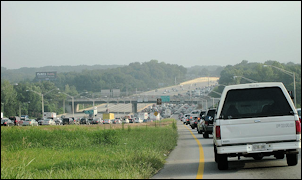
Congestion

Politically, congestion is a relative term.

I penned an opinion piece in the Minnesota Daily about congestion pricing back when I was an undergraduate in civil engineering school. At that point in my life I believed – like most Americans today believe – that gas taxes pay for the cost of highways, that any lack of funding was due to bloated bureaucrats taking money from roads to pay for other things and that rural areas generated most of the revenue in the system. If that article surfaced today, it may be a bit scandalous, especially given how much my understanding has changed over the years.

Of course, the gas tax comes nowhere near paying for the road system. The cost of bureaucrats – bloated or not – is a small percentage of transportation funding. And rural areas pay a tiny fraction of the cost of their transportation, instead relying on the financial productivity of urban areas to maintain their lifestyles and what they inappropriately label a “local economy”. It is a cruel world.

In the series I wrote on financing a World Class Transportation System, congestion pricing played a major role. I’ve taken a little bit of heat over that, both on and off line, so I wanted to elaborate a little bit and see if I can find some converts.

With the current highway system, we design for rush hour – for peak flow – and, ironically, we call that efficient. For places like my hometown of Brainerd, that means for 10 minutes each day the main highways are a little congested. For the remaining 23+ hours they are vastly underutilized. A perverse definition of efficient. Continue reading

How to Create Healthier Communities without Breaking a Sweat

healthy_placesby James A. Bacon

American society is buckling under the strain of health care costs. The debate, as I have often opined, is stuck on the question of who pays those costs rather than how we can bring costs down. Improving Americans’ health is not a job we can should relegate to Congress and the General Assembly. It is a job for all Virginians — including the real estate industry, as Maureen McAvey with the Urban Land Institute noted at a meeting of ULI’s Richmond branch Wednesday morning.

Chronic diseases such as obesity, heart disease and diabetes reflect 21st century lifestyles marked by too many calories and too little exercise. Exhorting the populace to work out more has not proven terribly successful. But there is a growing conviction that we can design our communities to make moderate activity a routine aspect of our lives. During her presentation, McAvey hit the highlights of a recent ULI publication, “Ten Principles for Building Health Places,” which outlined several approaches to making our communities more hospitable to healthy living.

The publication contains many ideas that should appeal to fiscal conservatives and free-marketeers allergic to the social engineering impulses of the do-gooders who normally champion such things. Designing communities to encourage people to get more exercise should not be an ideological issue. If anything, conservatives should applaud any approach that encourages individuals to assume more responsibility for their own health.

Here are some of the ideas I plucked from the publication and McAvey’s remarks that philosophical conservatives should embrace: Continue reading

Study Boosts Case for Columbia Pike Streetcars

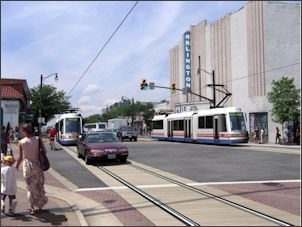
Rendering of Columbia Pike streetcar system.

by James A. Bacon

Investing $284 million in a streetcar system along Columbia Pike would generate between $3.2 billion and $4.4 billion in net tax revenue for Arlington and Fairfax Counties, over and above capital and operating costs, over 30 years, according to a new analysis by HR&A Advisors prepared for Arlington County.

The street car system — 14 streetcars stopping every quarter- to half-mile — would run between Bailey’s Crossroads in Fairfax and Pentagon City in Arlington. Travel time between the two points would be 23 minutes, only one minute longer than for the buses, but the street cars would carry 3,200 more passengers daily and would generate more  real estate investment along the corridor, concludes “Columbia Pike Transit Initiative: Comparative Return on Investment Study.”

“This study further demonstrates that streetcar is the right investment for Arlington,” said Arlington Board Chairman Jay Fisette in announcing the study.

Streetcar opponents had argued that the streetcar would cost far more than upgrading the bus system to 60-foot, articulated buses. The capital cost (in 2014 dollars) would be only $67 million for the buses compared to $284 million for the streetcars, while buses would cost only $140 million to operate and maintain over 30 years compared to $230 million for the streetcars. Total difference between buses and streetcars: $217 million over 30 years, averaging $7.1 million a year (assuming no adjustment for net present value). Continue reading

Are Mid-Rise Cities Better than Everything Else?

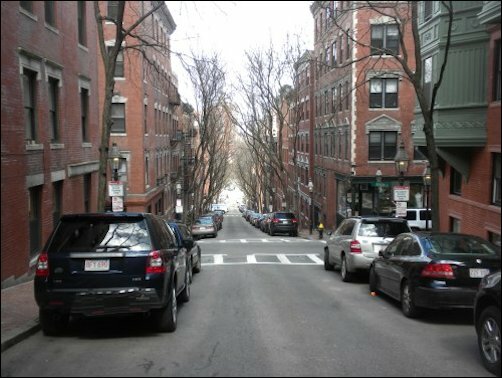
Boston

Boston

by Jim Dalrymple

Perhaps the ideal size of a building is just tall enough (or short enough) that people will still take the stairs to the top.

That’s basically the idea Robert Freedman suggests in a great post over at Planetizen discussing the pleasure, economics and feasibility of cities with plenty of medium-height buildings. The idea is that cities need some amount of density to thrive, but massive elevator-oriented towers don’t feel sufficiently human scale.

I agree; pretty much all of my favorite spaces across the world are dominated by mid-rise buildings. As Freedman points out,

In areas of Manhattan where entire blocks of walk-up apartments have been preserved, the human scale provides an amazing and welcome contrast to the soaring, elevator-towers that cover much of the rest of the island. You immediately sense how the heights of the buildings are in harmony with the width of the street. The materials are warm and natural, and, on the Avenues and major streets, the sidewalks are lined with small shops and restaurants. While walking, you have the sense that you “fit.” It’s not unlike retrieving your jacket after having mistakenly slipped into someone else’s that was several sizes too large. It just feels right. Continue reading

Nashville Housing Market 13th Most Stable of 50 Metro Areas

by Rod Williams

Freddie Mac, the giant quasi government agency that provides mortgage capital to lenders, today released its inaugural Freddie Mac Multi-Indicator Market Index. MiMi is a new tool that monitors and measures the stability of the nation’s housing market, as well as the housing markets of all 50 states, the District of Columbia, and the top 50 metro markets. MiMi assesses where each market is relative to its own long-term stable range by looking at home purchase applications, payment-to-income ratios (changes in home purchasing power based on house prices, mortgage rates and household income), proportion of on-time mortgage payments in each market, and the local employment picture.

In the ranking just issued today, Nashville is shown doing well; not great, but better than many. Nashville is ranked 13th out of 50 Metro areas. Memphis, the only other Tennessee metro area in the top 50 areas is ranked at 45th. The top three slots are all in Texas: San Antonio, Houston and Austin. At number 4 is New Orleans. My daughter lives in New Orleans now and I had an occasion to visit for a month last fall. While there are still areas not recovered from Katrina, New Orleans has attracted lots of newcomers and  there is a lot of rebuilding and gentrification going on. Still, I am surprised to see it rank so high.

Detroit which, as we know, has large sections of the city that have been abandoned or burned by arsonists and looks like something out a science fiction movie about life after the apocalypse, ranks at 36. I expected it to be at the bottom. Las Vegas comes in at number 50. All 50 metro areas and all states are shown to be improving. Continue reading

Day 6: A World-Class Transportation System

by Charles Marohn

Today I’m finalizing the list of Winners and Losers…

Environmentalists (WINNERS): While I’m not going to claim to understand the entire environmental movement or the motivations of each complex part, in general my proposal will result in fewer automobile miles traveled, less intrusion on habitat in order to build automobile infrastructure and ultimately a reclamation of some places already impaired. On the flip side, it will also result in an intensification of the land use pattern, an essential (and inevitable) outcome but one which many environmentalists fight against on the ground. People like Kaid Benfield have given me faith that environmentalists can be more than NIMBYs and so I am optimistic that most would see the merits in what I’ve proposed.

Urban Dwellers (WINNERS): Clearly, ending a system that takes wealth from financially productive urban areas and transfers it (in the name of “economic growth”) to financially unproductive areas in the suburbs and exurbs will help urban dwellers. And while some urban areas will use their money for parking lots, stroads and traffic signals because they don’t understand how wealth is created (Kansas City), I doubt it will take long for those that haven’t yet figured it out to fully understand that catering to commuters is not the path to prosperity. My proposal creates instant, albeit incremental, opportunities for urban improvement that should accelerate over time.

Suburban Dwellers (MIXED): I’m going to lump suburban dwellers into two categories (probably unfair): those who choose the suburbs as a lifestyle preference and those who “drive until they quality” and have chosen the suburbs purely for perceived affordability. For the former, assuming they have the wealth to live in other places but choose the suburbs, their quality of life would improve. Congestion pricing may bring more costs but it will also bring consistently shorter commutes and predictable investments in transportation infrastructure. Suburban cities would have more tools to meet financial challenges and improve the quality of life for residents. Without the current collection of subsidies, they will have to pay for more of what they want, but that is the kind of government many theoretically envision anyway. Many will likely do a good job. Continue reading