What Robert Moses Got Right (and Kansas City Gets Wrong)

by Michael Lewyn

Robert Moses is most famous (or perhaps infamous) for paving over large chunks of New York City with highways. But he also built and rehabilitated thousands of acres of parks and playgrounds; and in this area his contribution to the city was more unambiguously positive.

Moses believed parks should be used not just for leisurely contemplation but for active recreation; for example, he added eighteen playgrounds to Central Park alone. Moses also commonly added ballfields, tennis courts and other sports-oriented spaces to city parks.

By contrast, Kansas City has many chunks of lawn that include no active uses whatsoever; some of them don’t even include benches to sit on. These grasslands (see here for an example) waste lawn that could be used for housing or commerce, artificially reducing city density and value without creating any compensating value.

(Cross-posted at cnu.org)

Land, Density and Resilience

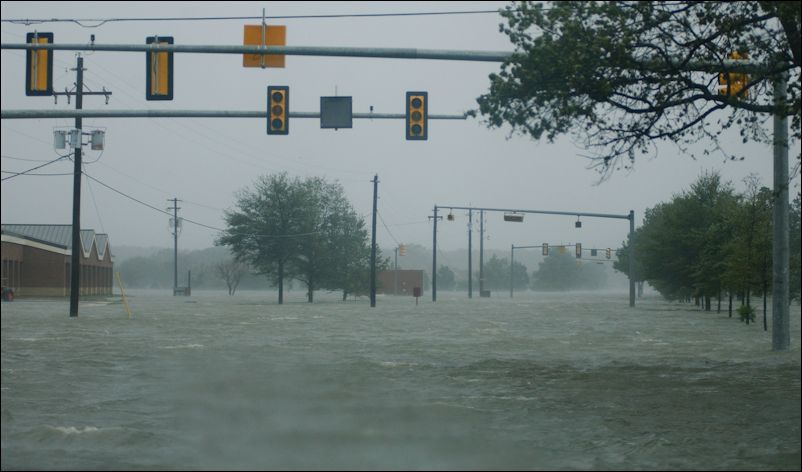
Flood-prone areas of south Hampton Roads. Source: Virginiaplaces.org.

Flood-prone areas of south Hampton Roads. Source: Virginiaplaces.org. (Click for detail.)

One more takeaway from the Resilient Virginia launch conference yesterday: All other things being equal, more compact communities are more resilient communities.

Like Bacon’s Rebellion, Cooper Martin, program director of the Sustainable Cities Institute, is a big fan of Joe Minicozzi and his maps and graphics showing how dramatically land value-per-acre varies between core urban areas, suburbs and the countryside. Densely settled urban cores have land values that are literally a hundred times higher per acre than low-density shopping centers and large-lot subdivisions.

In my commentary, I have focused mainly upon the fiscal folly of building disconnected, low-density development. The infrastructure — the roads, utilities, sidewalks and other amenities — are more expensive per household to maintain. But Martin added a new dimension when addressing the Resilient Virginia conference yesterday. Low-density development makes it more expensive to harden homes and businesses against disruption and catastrophe. When the taxable value of land is high, it’s easier to support expensive investments to protect that land than when the value of the land is low. Continue reading

The Non Global-Warmist’s Case for Resilience Planning

hampton_roads_flooding2 by James A. Bacon The key to building a strong resiliency movement — making communities more adaptable in the face of natural and man-made disasters — is finding common ground. So argued Steven McNulty, director of the U.S. Department of Agriculture Southeast Regional Climate Hub, in addressing the launch event of Resilient Virginia this morning. Fear of rising temperatures, droughts and sea-level rise is a major impetus behind the increasing emphasis that all levels of government are placing on resiliency. But political views about climate change are highly polarized, McNulty said. “Are you a fear monger, or are you a denier? We need to get beyond that.” Most climate scientists believe that man-made climate change is a cause for concern. But the forestry land managers McNulty deals with do not. In a recent survey, he said, “only 10% of Southeast foresters thought that climate change is man-made and real. The agricultural community is almost as disbelieving.” As it happens, their perceptions are not without basis, he added. Rising temperatures in the Southeastern U.S. have been far less pronounced than anywhere else in the country. Continue reading
The Self-Inflicted Infrastructure “Crisis”

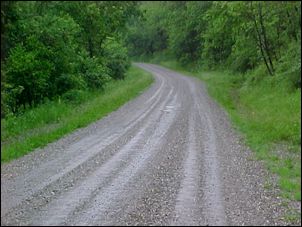
Gravel roads look a whole lot better if you're paying for them yourself.

Gravel roads look a whole lot better if you’re paying for them yourself.

by James A. Bacon

We continually hear about an “infrastructure crisis” in the United States, a malady from which Virginia has not been spared. Talk of pot-holed streets, tottering bridges and crumbling highways invariably moves to talk about the need to spend more on infrastructure, which morphs into raising taxes — never by talk about paring back infrastructure that has outlived its economic usefulness.

However, there is a growing body of commentary suggesting that the problem may not be too little infrastructure but too much — too much of the wrong kind of infrastructure in the wrong place. The drum-bangers for more infrastructure spending ignore a fundamental reality: The more infrastructure you build, the more you have to maintain. The more maintain, the more you spend on maintenance. The more you spend on maintenance, the less there is to spend on new stuff.

Writing in New Geography, John Sanphillippo focuses on the disproportionate resources devoted to paving and maintaining subdivision roads in New Jersey. Based on his description, New Jersey should rename itself from “the Garden State” to “the Asphalt State.” The New Jersey Highway Trust Fund is near bankrupt, he writes. Unless the gas tax is raised, all revenue will go exclusively to debt service. And we thought we had problems in Virginia! Continue reading

Atlas Sprawled

Libertarians dream of a laissez-faire capitalist nation, one with minimal government regulation and lots of entrepreneurs. There are many reasons why this goal is difficult to achieve; however, one reason is inherent in capitalism itself. As soon as a business gets large enough to have some spare cash, it might use that spare cash to obtain favors from government.

Of course, I am not the first person to discover this. For example, the plot of Ayn Rand’s Atlas Shrugged focuses less on the evils of the welfare state than on the efforts of a well-connected steel company (Orren Boyle’s Associated Steel) to use government to squash competition from Rearden Steel.

Peter Norton’s book Fighting Traffic shows how automobile-oriented street rules are at least partially a result of similar special interest manipulation. In the early 1920s, auto sales suffered because of urban traffic congestion and bad public relations related to the death toll from automobiles running over pedestrians. The auto industry and related groups such as road-builders and tire companies (or as Norton calls these groups, “motordom”) responded in three ways.

First, motordom hijacked the safety issue by blaming the victim. Car companies claimed that pedestrian deaths were the result of something called “jaywalking” (i.e., pedestrians using the streets as they had always used them, rather than waiting for automobile traffic to take its turn). In addition to financing a public relations campaign against jaywalking, motordom encouraged cities to enact anti-jaywalking ordinances.

Second, motordom lobbied government to reconstruct American streets in ways that favored fast car traffic, and even created its own “experts” to lobby city officials. A Los Angeles auto club hired Miller McClintock, a Harvard graduate student, as a consultant. Before being hired by the car lobby, McClintock wrote that widening streets would merely attract more traffic. After going on the motordom payroll, McClintock endorsed wider streets and fining jaywalkers. Car companies then hired McClintock to establish a foundation that taught engineers how to design cities for cars. The motordom-subsidized engineers then went to work in cities throughout the country, creating the sort of streets that infest cities today: wide streets where traffic flows at speeds fatal to pedestrians. Continue reading

Secrets of Congestion-Busting Cities

Recently, I read an email newsletter arguing that cities really can build their way out of congestion, because the regions that have actually reduced congestion have built so many roads that the increased road mileage actually exceeded the increase in vehicle miles traveled.

I have no doubt that this proposition is true for the past few years, but only because over the past decade or so, congestion decreased in most cities, regardless of their policies. According to the Texas Transportation Institute (TTI), the number of hours per driver lost per congestion in the 101 largest urbanized areas decreased from 52 in 2005 (its all-time high) to 43 in 2011—the same level as in 1996. (All TTI data discussed here are available at an Excel spreadsheet available at this link.)

But to me, the more interesting question is the long-term trend, starting from 1982 (the first year of TTI’s statistical database). Because congestion increased almost everywhere during the 1980s and 1990s, only three regions are less congested (as measured by hours lost per driver) than 30 years ago: Anchorage, Alaska, Indio-Palm Springs, California, and Lancaster, California.

In Anchorage, the number of freeway lane miles did not keep up with vehicle miles traveled (VMT): VMT increased by just over 70 percent (from 800,000 to 1.38 million) and lane-miles increased by just over 50 percent (from 125 to 190). However, arterial lane-miles did grow more rapidly, increasing by 28 percent (from 300 to 386) while arterial VMT increased by less than 20 percent.

In Indio, freeway miles increased by 144 percent (from 45 miles to 110) while VMT again increased somewhat more rapidly, by 171 percent (from 390,000 to 1.058 million). Arterial streets increased by 136 percent (from 345 miles to 817), while arterial street VMT increased by 179 percent (from 1.6 million to 4.473 million). So even for arterial streets, VMT actually increased more rapidly than road mileage. Continue reading

Utilities, Schools and Induced Demand

Cross-posted from cnu.org

Numerous commentators have questioned the view that increased highway spending reduces congestion, pointing out that highways may increase demand for driving, thus leading to more traffic.  In a recent newsletter, Robert Poole responds to the “induced demand” concept by writing:

 And this gets back to the question of how a highway provider should respond to increased demand from its customers. Should it tell the customers they are wrong to prefer personal mobility? Should an electric utility tell its customers they should switch to wood-burning stoves, rather than adding generating capacity? Should a school district not add schools to serve a growing population of families with kids? Infrastructure providers are supposed to provide the vital facilities that people need (and are willing to pay for), not tell them their preferences are wrong.

But the comparison between highways and other goods strikes me as not quite right.  The utility customers are presumably paying for their electricity.  By contrast, even if gas taxes were equal to highway spending (which they often aren’t) the highway system is rotten with cross-subsidies: because all drivers pay into the same gas tax trust fund, taxes paid by urban drivers can be used predominantly to serve rural drivers, or vice versa.  Moreover, highway spending may create externalities, because increased driving leads to increased pollution.  So yes, sometimes preferences are “wrong”, in the sense that accommodating them creates social costs.

What about the school district analogy?  Poole seems to think that it is axiomatic that of course school districts should add population where there are more children. But it seems to me that this need not be the case: school districts can always enlarge classes.  Here, as in the situation of highways, the right answer depends on externalities: do larger classes create worse educational results, thus creating societal externalities (such as stupider graduates who are less productive or more criminal)?  And does such harm outweigh the social costs of raising taxes to build more schools?  I suspect the right answer is: sometimes yes, sometimes no.