Highways Don’t Pay For Themselves, Even When They Do

(cross-posted from cnu.org)

One common argument for the highway-centric status quo is that highways pay for themselves, while trains and buses are government-subsidized.  This argument has been debunked again and again, and the debunking itself has even been debunked.

But even if the road system as a whole pays for itself (that is, the amount of vehicle-related taxes is equal to the amount of road spending) many roads are still highly subsidized by government.

Why?  Because roads are heavily cross-subsidized: that is, the users of one road pay not for that road, but for other roads used by other people.  For example, suppose I live in an inner suburb at the edge of a small city three or four miles from downtown, and 90% of my travel is within the city limits.  However, most of my state’s road spending goes to suburban highways that shift development to suburbs far from my neighborhood.  In this scenario, my gas tax money is not going to the roads I drive on; in fact, it is going to roads that benefit people who live far from where I live.  Thus, I am essentially subsidizing suburban and rural drivers.

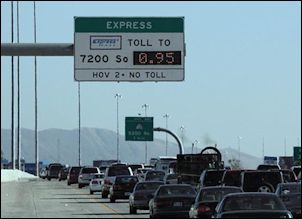
The only way to eliminate such subsidies would be to make every road a toll road, so that my taxes would only go to roads I drive on.  This may be practical for limited-access highways, though I do not see how it could become practical for surface streets.

Transit-Oriented Cities And Safety: Another Look

(Cross-posted from planetizen.com)

Some months ago, a blog post by Todd Litman pointed out that transit-oriented cities tend to have less overall crime. This post inspired me to address the relationship between big-city violence and big-city sprawl, but in a slightly different way.

First, I decided to focus on the crime most likely to be actually reported to police (that is, homicide), as opposed to lesser crimes which might inspire less police interest. Among the 30 largest U.S. cities, there are only six where public transit ridership is truly substantial (over 20 percent of commuters): New York, Philadelphia, Boston, Washington, Chicago, and San Francisco. In 20 cities, fewer than 10 percent of commuters used transit. In an “in-between” group of four cities (Baltimore, Portland, Seattle, Los Angeles) between 10 and 20 percent of commuters used transit.

The high-transit group’s murder rates ranged between 5.1 per 100,000 residents (New York) and 21.5 per 100,000 (Philadelphia), with a median of 11.4.(1)

The medium-transit group’s murder rates varied more widely, mainly because of the presence of Baltimore (34.9 murders per 100,000) in this group. Although this outlier inflates the group’s mean homicide rate, its median homicide rate was only 5.7, lower than the high-transit cities.(2) Or to describe the situation another way, if we group the ten cities with transit modal shares over 10 percent, their collective median is 8.7 homicides per 100,000.

What about the low-transit group? The median homicide rate for the low-transit cities was 8.7(3)—exactly the same as the median for the cities with transit mode shares over 10 percent, though slightly lower than the median for the six most transit-oriented cities. Thus, it appears that there is not a significant difference in violent crime between the most car-dominated cities and more transit-oriented cities (especially since many of the “car cities,” such as Houston, have annexed hundreds of square miles of suburban territory).  Given the wide range of factors affecting crime rates, this lack of difference certainly accords with my common sense. Continue reading

How much does retail diversity matter?

(cross-posted from cnu.org)

Last weekend, I visited Kansas City, Mo. to look for apartments (since I am moving there in August to teach at the University of Missouri at Kansas City Law School). I focused my search on the Brookside and Country Club Plaza neighborhoods, two areas within a 45-minute walk of the law school.

Country Club Plaza is especially interesting- one of the first American shopping centers accessible by automobile. In some ways, the Plaza is a great urban place, full of pedestrians in a city designed around the automobile. Although residential and commercial uses are rarely on the same blocks, they are within a short walk of each other: the commercial areas are ringed by apartment buildings and condos, with single family houses a few more blocks away.

But one thing troubled me: the retail seems limited to restaurants and specialty shops (mostly national chains). However, many daily needs cannot be met at the Plaza — no grocery stores, no pharmacies, no place to get (for example) a small container of yogurt or a granola bar. This lack of retail diversity makes it a less-than-perfect urban place by my lights. On the other hand, does it keep people from going there? Evidently not.

Who Wants to Be a Billionaire? Embrace Congestion Pricing

competitive_advantage

=======================
This is the second part of a four-part series.

Part 1        ◊       Part 2
Part 3   
     ◊       Part 4
=======================

by Michael Brown

As I contended in my last post, Americans can do mountains of good for sustainability by using free-market pricing tools to solve traffic congestion. In this piece, I will argue that the first state to get serious about Freeway Optimization will enjoy a competitive advantage over all others.

The argument for how your community can become a billionaire has two parts. First, if your neighbors commit to Big Digs but your state solves the problem without construction, then you’ll save those construction costs while others mire themselves in debt. Second, Big Digs temporarily reduce congestion locally while Freeway Optimization solve congestion regionally. The resultant reliability and time savings will translate into financial and societal benefits worth billions of dollars.

Building our way out of congestion

In the 1950s, it was hard to go very far by auto, so transportation planners invented freeways.  Those worked great for 20 years or so, but they motivated people to adopt far-flung lifestyles. It was cheap and easy to add capacity by filling the medians, but then the freeways bogged down again. Next, transportation departments paved the shoulders. Now we have freeways with five to eight lanes each direction, and the latest talk is how to “solve” the worst sections with double-decker freeways! That strategy may work a while, just as previous palliatives did. But the cost of these Big Digs and Double Deckers will be so high that our children will be in debt forever. Has anyone looked at the national debt clock lately? Continue reading

Waiting for Uber

Jonathan Trainum. Photo credit: Style Weekly.

Jonathan Trainum. Photo credit: Style Weekly.

by James A. Bacon

The Richmond metropolitan area has a modest but growing taxi fleet. The Henrico County Police Division, which manages the bulk of taxi regulation in the region, issued 834 tax permits last year. Unlike some cities, which restrict the issuance of taxi permits — in New York City, taxi medallions can cost upwards of $1 million — all it takes to operate a taxi in the Richmond region is a background check, an easily obtainable certificate of need and a vehicle that meets code — a process that costs about $40.

Richmond’s taxi business is about as laissez-faire as you can find anywhere in the country. So, it’s not a surprise that the industry has seen the rise of a company like Napoleon Taxi. Starting six years ago as a one-man taxi company, Jonathan Trainum has expanded his enterprise to a 32-car fleet and 90 drivers. As Style Weekly tells the story, he’s investing in technology and he’s bracing to do battle with Silicon Valley ride-sharing company Uber, which has begun sniffing around the Richmond market.

Trainum started his taxicab career working for a Southside taxi company but chafed at the dispatchers’ blatant favoritism toward certain drivers and the reprimands he received for making sure customers made it into their homes after a ride. He also disapproved of the way dispatchers routinely ignored calls from public housing projects. Trainum thought he could do better. Fortunately, local taxi regulations posed few barriers to entry. Continue reading

For Sustainability, Convert Freeways to Fastways

tolls

=======================
This is the first part of a four-part series.

Part 1        ◊       Part 2
Part 3   
     ◊       Part 4
=======================


by Michael Brown

By many peoples’ reckoning, faster-running, free-flowing freeways are the enemy of environmental sustainability. But what if I told you of a strategy that would:

  • Result in faster freeways without causing further sprawl?
  • Have miniscule construction and maintenance costs?
  • Double or triple transit ridership, as well as reduce auto trips on arterial streets?
  • Break the cycle of “building our way out of congestion,” saving billions for other worthwhile efforts?
  • Create thousands of permanent jobs, and strengthen the economy by billions?
  • Be a market-driven solution that allowed people options for any given trip?

This article will show how faster freeways are entirely consistent with the goals of greening environment, improving public health, increasing economic productivity, and reducing land consumption.

“Fast and Free” has degraded to “Free but not Fast”

The early decades of the great American freeway experiment enjoyed freeways that were both “fast and free,” as in not tolled.  Everyone loved it, including me.  But recent decades have fallen into “free but not fast.” As traffic and congestion increased, we filled medians with new lanes to get back to fast and free. Then we paved shoulders, and that worked too – for a while. But adding lanes to increase throughput enabled millions of drivers to adopt far-flung lifestyles, creating more demand. Now that the easy solutions have been completed, the next generation of freeway improvements is incredibly expensive. Boston’s “Big Dig” project spent over $24 billion for about 8-miles of underground freeway!  Now virtually every city has engaged in extremely costly freeway construction and many are talking seriously about their own “Big Dig” double-decker freeway projects. Continue reading

Should Virginia Beach Subsidize a New Arena?

arena-lobbyby James A. Bacon

United States Management (USM), a Virginia Beach development company, wants to build a $200 million, 18,000-seat arena and sports complex adjacent to the city’s convention center, which, it claims, will create jobs, boost the local tourism industry, bolster city property values and bring events to Hampton Roads that enhance the regional quality of life. Backed by $150 million in financing from Chinese interests, the company would spend $200 million of its own money.

All it will take from the City of Virginia Beach is a $52.7 million contribution to infrastructure costs for road improvements, utilities and parking. … Plus $26 million in optional streetscape improvements and additional road improvements…. Plus $7 million yearly in tax revenue generated by the project to pay down USM’s debt.

This project has consumed the attention of Hampton Roads much in the way that the Shockoe Bottom baseball stadium has absorbed Richmond residents. The arena is back in the local news thanks to the release of a consultant report detailing the commitment the city would have to make under the terms of the deal proposed by USM. That commitment, though large, is significantly smaller than called for in a proposal made and rejected earlier in the year, which makes it look good by comparison. Virginia Beach Mayor Will Sessoms is supportive of the project, although some City Council members have expressed concern about the public cost. Continue reading