The Invisible Parking Garage

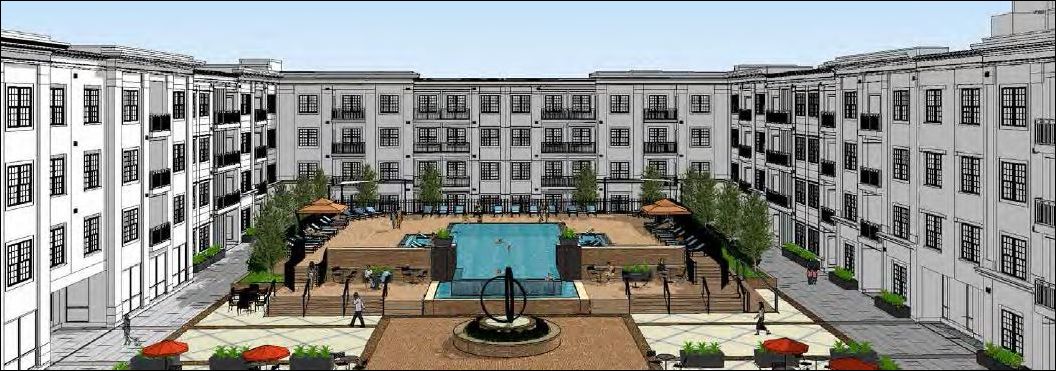
Draft rendering of planned apartment building at Libbie Mill-Midtown shows how garage rooftop will be used as communal space.

Draft rendering of a planned apartment building at Libbie Mill-Midtown shows how garage rooftop will be used as communal space. Illustration credit: Gumenick Properties.

by James A. Bacon

It is axiomatic among New Urbanists and like-minded brethren in the Smart Growth movement that parking garages create dead space in the urban fabric that discourages walkability and depresses neighboring property values. Some architects try to dress up the structures by giving them facades that imitate the look of regular buildings, draping them with plantings or otherwise making them visually interesting. Another strategy is to hide garages underground or relegate them to the middle of the block.

There is nothing new under the sun, as the old saying goes, so the Gumenick Properties design for a planned apartment building in its Libbie Mill-Midtown project may not be the first of its kind. But I feel safe in saying that it is unique to the Richmond real estate market — and it’s a solution that, economics permitting, should be employed more frequently.

Libbie Mill-Midtown is an 80-acre mixed-use development in Henrico County roughly midway between downtown Richmond and the Innsbrook Corporate Center. The company is billing the $434 million community as “ten minutes from everything.” When complete in ten years or so, depending upon market conditions, the project is expected to have 994 for-sale homes, 1,096 apartments, 160,000 square feet of retail space, a public library and office space. Marketing the project to people who want to rely upon the automobile less, Gumenick is placing tremendous emphasis on walkability. Continue reading
A Radical Notion: Paying for Onstreet Parking in Cville

Image credit: Charlottesville Tomorrow

Image credit: Charlottesville Tomorrow

Irony time: Virginia soon may get a test in market-based parking in… the People’s Republic of Charlottesville. The city would start charging for 800 on-street parking spaces downtown, now free, and install a system of smart traffic meters under a proposal advanced by Mark Brown, new owner of the Charlottesville Parking Center (CPC).

The city reverted to a system of free parking two years ago, creating a severe misallocation of parking spaces. Downtown employees grab the free on-street spots, making it exceedingly difficult for visitors and shoppers to find convenient parking spots. The idea is to encourage downtown workers either to park in long-term structured parking, which would free on-street spaces, or to ride bicycles or use mass transit.

“The promotion of free parking on the street is at odds with the promotion of walking, cycling and mass transit,” said Mark Brown, the owner of Yellow Cab and the Main Street Arena who became the sole shareholder of the CPC last summer, reports Sean Tubbs for Charlottesville Tomorrow.

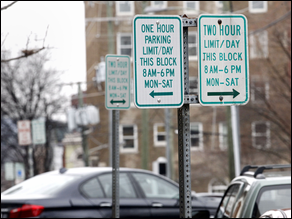
The proposal, very conceptual in nature and subject to revision, is to install about 60 kiosks where parkers would enter their license plate information to pay. There would be two zones, a core zone with more restrictive parking lengths and higher rates, and a peripheral zone, where people could park longer and pay less. On-street parking rates would encourage long-term parkers to use structured parking. A smartphone app would provide real-time information on parking availability and rates. A portion of the parking revenue would be dedicated to transportation alternatives such as a free trolley, park-and-ride-options and cheap monthly bus passes. The remainder would go to a Business Improvement District. Continue reading

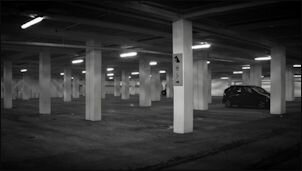
A Parking Paradox

empty_garageby Michael Lewyn

One common argument against the abolition of minimum parking requirements is that abolition would be futile: developers generally build as much parking as the law requires and then some.

A recent article in Access magazine by Cornell planning professor Michael Manville suggests otherwise. Manville studies the impact of Los Angeles’ “Adaptive Reuse Ordinance” (ARO), which provides that landowners who convert downtown commercial/industrial land to residential use need not build additional parking, even if city ordinances would otherwise require such parking.

Manville finds that the overwhelming majority of ARO landowners provided some parking: only 13 percent of ARO apartments, and 31 percent of condominium buildings, were completely parking-free. However, this statistic underestimates landowners’ use of the flexibility provided by the ordinance, since some of the buildings may have had preexisting parking.

In addition, ARO buildings typically provided less parking (or at least less on-site parking) than Los Angeles law requires for other buildings. For condos, Los Angeles typically requires two parking spaces per unit; however, the minimum ARO unit provided 1.3 spaces. ARO apartment units typically complied with the city’s one-space-per unit requirement; however, ARO apartment parking spaces, unlike most Los Angeles parking spaces, are often off-site. The typical ARO unit had only 0.6 parking spaces; thus, many landowners leased parking from nearby parking spaces, providing the developers with additional flexibility and reducing housing costs. Continue reading

Where the Parking Is Easy

Jay Primus, manager of SFPark, stands next to a variable-price, pay-by-phone parking meter.

Jay Primus, manager of SFPark, stands next to a variable-price, pay-by-phone parking meter.

San Francisco’s smart parking experiment — setting prices for on-street parking based on supply and demand — has brought lower average charges, made it easier to find a space and reduced parking-related anxiety.

By James A. Bacon

San Francisco has a reputation in many parts of the country as a bastion of left-wing politics. Haight-Ashbury and hippies. Harvie Milk and gay pride. The People’s Republic of Berkeley. (OK, Berkeley is across the Bay but it’s nearby). Between the municipal labor unions, high-speed trains and high taxes, if the city were a country, some might say, it would be more socialist than Sweden.

But there’s at least one government function in which the City of San Francisco has led the way in applying market-based principles — on-street parking. The city was one of the first in the world to scrap the time-honored practice of charging drivers a flat rate for a parking space regardless of time or location. San Francisco has put into place a state-of-the-art system that varies the charge for a parking space in response to supply and demand.

Imagine that. While cities and states that supposedly believe in the efficacy of markets are stuck in the socialist mindset of charging everyone the same rate for on-street parking, California’s citadel of liberalism installed a system of sensors, pay-by-phone billing and advanced algorithms to allocate roughly 25% of the city’s on-street parking using the price mechanism. Two years into the experiment, San Francisco officials and outside scholars are pronouncing the system a success. The program still needs tweaking, but the San Francisco Municipal Transportation Authority is considering how to expand the system throughout the city. Continue reading

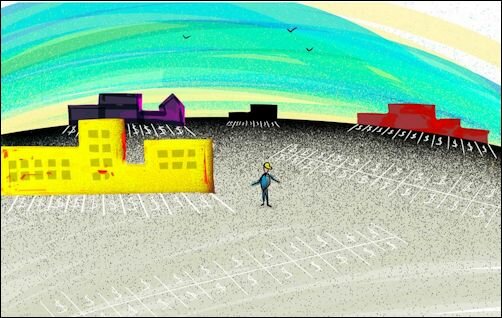
Car-centric Codes Are Driving Developers in Circles

parking

America, we are told, is involved in a “love affair with the car.” If so, then this love affair has created a strange kind of lovechild, one that has had major implications for the way we go about our daily lives and build our communities. Its name is parking.

But that should really come as no surprise. Land use policies have elevated the status of the car by separating residences from offices and commercial centers. This separation leads to a greater need to drive from one place to another. Connecting these separated areas requires billions of dollars of investment, primarily into expanding road networks.  When drivers travel through this network, and finally arrive at their location – whether it’s home or work or a store – they’ll need a place to park.

Building and maintaining this network is expensive, yet how aware are we of parking’s real costs? Do we fully understand how parking regulations influence the land use and development market? Continue reading

More Good Questions about Self-Driving Cars

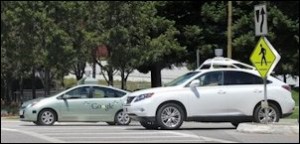
Will Self-Driving Cars re-write the rules for intersection design?

Will Self-Driving Cars re-write the rules for intersection design?

by James A. Bacon

Nat Bottingheimer, a former executive with the Washington Metropolitan Area Transit Authority (WMATA), has been asking the same kinds of questions that I have about the impact of self-driving cars (SDCs) on transportation policy and human settlement patterns. Writing in Greater Greater Washington, he urges transportation planners to begin thinking about the potential impact of SDCs on everything from the demand for highways and mass transit to ride sharing and parking. Says he: “Planners and place-making advocates will need to step up their game.”

In my previous cogitations, I had focused mainly on two potential impacts: (1) reducing the perceived cost of long-distance commuting by allowing drivers to spend time on non-driving tasks like reading email and surfing the web, and (2) enhancing the advantages of shared car-ownership and shared car-ridership services that allow more people to live car-free lifestyles. The implications, to the limited extent that I had thought them through, pointed to a taffy-pulling effect on the urban form that would favor high-density communities in the urban core and low-density communities on the metropolitan periphery.

Bottingheimer raises other issues. They include (with some editorial elaboration):

  • Highway capacity. If SDCs can travel faster at closer distances, the potential exists to increase highway capacity without the need to add new lanes. Asks Bottingheimer: “How can planners today [ensure] that scarce infrastructure dollar are spent on things that might be less needed in the near future?”
  • Smart intersections. Could coupling SDCs with “smart” traffic lights make it possible to increase the through-put of intersections without the need for widening? Continue reading