Why Do We Overlook a Golden Opportunity?

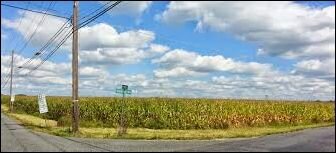
130+ acre working farm in Lower Macungie. If the township doesn’t get proactive in preservation this will be 300 units someday.

130+ acre working farm in Lower Macungie. If the township doesn’t get proactive in preservation this will be 300 units someday.

by Ron Beitler According to the One Lehigh Valley Local Food Economy Report – The biggest barrier to fostering a more robust local food economy is continued loss of farmland. 

Important to note since often overlooked: Agriculture IS a form of industrial infrastructure. Yet communities continue to pave over this invaluable asset only to replace it with uses that require additional infrastructure and strain local resources to sustain. Farmland is fiscally one of the highest value land uses in terms of liabilities vs. revenue.

  • Since 1930 the LV has lost 80% of it’s farms. Based on average diets Lehigh Valley farmers can only produce about 20% of the Valley’s food demands. With a market shift towards locally grown foods there is clearly money to be made in both local and regional economies.

All it takes are strategic investments in “food infrastructure” needed to support a local food economy. For ex: Aggregators, distributors, food business incubators, grain mills, and more food hubs. Even underserved and undervalued we already today have a local food economy that contributes $17 million annually to the LV economy. Continue reading
Young Residents Want Walkability

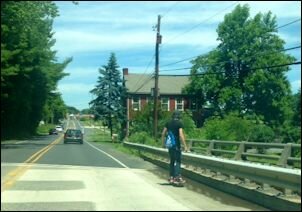
Young adults walk daily on dangerous corridors in the township.

Young adults walk daily on dangerous corridors in the township.

by Ron Beitler

At last night’s meeting we had five letters that were very clearly a school (High School?) Social Studies project or something similar.

They were all in identical format and were physically mailed to the township, which is what leads you to believe it was a project. They were also all very good. Thoughtful and thoroughly researched.

What was interesting is that four of the five dealt with walkability issues. When selecting a topic to write local government about almost all decided to write asking for more walkability. This is in line with study after study that says young adults want to live in walkable/connected communities. 

It’s not surprising at all. Living on Lower Macungie Rd. and driving Brookside frequently you see scenes like the one above every single day. Whether it’s on foot, bike or here on a skateboard we have tons of walking on our corridors by young people in very unsafe situations.

In my opinion this currently represents a safety issue. Yes, we want to encourage more walking. But the fact is we already have A LOT of walking right now. Most of our arterial and connector roads are poorly equipped and fail miserably as complete streets. We need to think less in terms of “connector” and “arterial” and more in terms of Complete Streets and Boulevards. We need to work in partnership with PennDOT to retrofit key corridor roads as multimodal complete streets.

Smart Growth America Pairs Local Leaders with Responsible Developers

Local leaders from around the country gathered in Washington DC to discuss smart growth policy issues. - Photo Smart Growth Americaby Ron Beitler

Spent time in Washington DC attending the Smart Growth America Local Leaders Council Policy summit. The conference paired 60 members of the national bi-partisan council of elected officials with responsible smart growth developers. (LOCUS) Issues such as project development and financing, transit oriented development and revitalization were topics of individual seminars.

For me, after six months as a newly elected official, what’s been most frustrating is our current crop of local developers. (The usual suspects…) The ones who do most of the mega greenfield projects in the area. There is so much inertia for status quo. Many developers are unwilling to or offer nothing but resistance to building innovative projects. Or worse they package typical cookie-cutter sprawl with whatever the current smart growth buzzword is in a misleading fashion. The result is projects sold under somewhat false pretenses. Locally a recent example would be the Allen Organ “dual use zone”. (Words have meanings) Continue reading

Wrapping Up TIF

by Ron Beitler

The TIF for Hamilton Crossings passed tonight 3-2.

Brian Higgins yes
Ryan Conrad yes
Jim Lancsek yes
Ron Beitler no
Doug Brown no

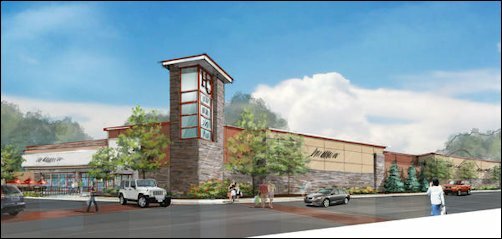
The bottom line is this. The Township will be getting a new and much anticipated shopping center. One that I believe was a certainty with or without the TIF. And that is great news for residents. According to one poll, over 80% of residents support the project but not necessarily the TIF funding.

I shared this basic sentiment as I generally supported the project but had concerns with misusing a funding mechanism designed for distressed communities.

I sincerely believe the township could have and should maintained more revenue resources (100% of revenue instead siphoning off 50% back to the developer). Continue reading

The Allentown Plan: Building Where the Jobs Are Needed, Returns Are Highest

allentownby Ron Beitler

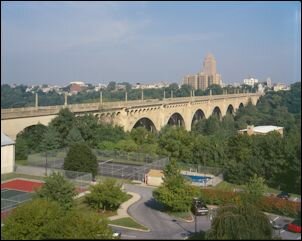
At a public meeting Thursday, city officials of Allentown, Pa., unveiled the second phase of a long-term plan to bring industrial and manufacturing companies back to the region. The plan is being crafted by Camoin & Bergmann Associates.

This is important on multiple levels: Smart growth is creating new jobs where people need them the most and where the infrastructure already exists. When we do this we get the highest ROI on investments. When that happens we keep taxes lower.

With a documented (albeit slow) return of manufacturing jobs to the U.S., Allentown must position itself to compete. We can help accomplish this by removing the costly array of state, local and federal programs built into the development process that encourage growth in costly locations where taxpayers inevitably directly and indirectly subsidize sprawl.

From the WFMZ link – “Bergman Associates’ planner Dan Sundell says ‘You get a lot of tax incentives and assistance by building [in Allentown],” he said. “It’s a big advantage over open land outside of the city.” – This is true, but the problem remains that we now also massively subsidize greenfield sprawl. And by doing this, the taxpayer return on investment is alarmingly low. Continue reading

Corporate Welfare

TIFby Ron Beitler

Last night at the township Board of Commissioners meeting a colleague, Commissioner Ryan Conrad, asserted that Tax Increment Financing (TIF) is not “corporate welfare.”

It’s important residents understand where commissioners stand on issues. This is because every four years we receive a job review from constituents in the form of an election. Therefore, I would be remiss if I didn’t clearly state that disagree with Mr. Conrad’s assertion in the strongest of terms.

“Corporate welfare” in this instance has been used as a rallying cry for residents who by and large support the project but without the 20-year tax forfeiture. Some institutional supporters have tried to use semantics and word games to insist this doesn’t qualify as corporate welfare. This is a disingenuous game.

The facts remain:

1. If Lower Macungie participates in the TIF, 50% of the developer’s incremental taxes are siphoned away from the township.

2. These taxes are funneled away from residents of Lower Macungie. The money is instead siphoned back to the developer and other private interests through Lehigh County Industrial Authority where it is allowed to be used to pay back construction bonds for improvements that are required of developers seeking to do business in the township. Continue reading

Got a Phone Call from Owner of a Business Today…

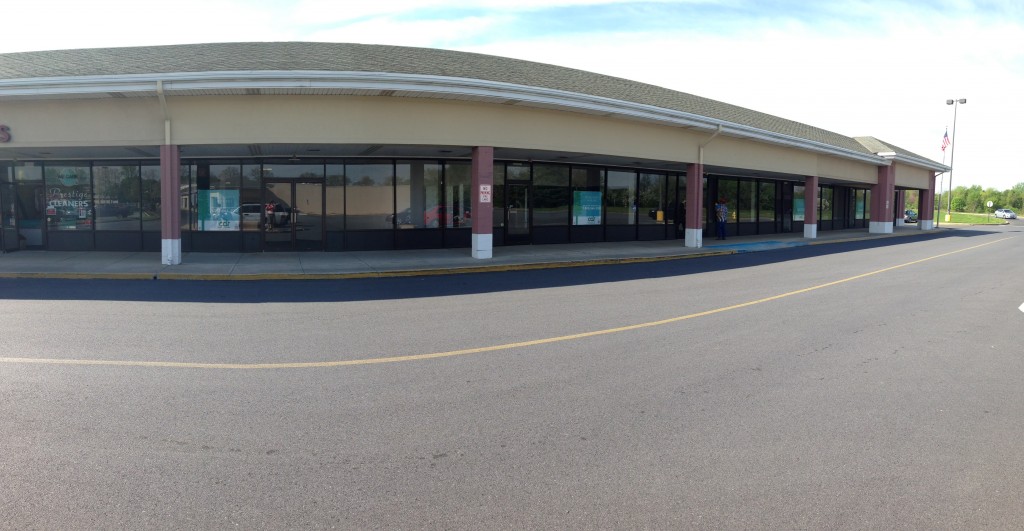
Above is a picture of 5 empty storefronts in the Giant shopping center. This is just one corner. In total there is over a dozen vacancies.

Five empty storefronts in the Giant shopping center. This is just one corner. In total there are more than a dozen vacancies.

by Ron Beitler

Got a phone call from a business owner today. He owns a business in the Giant shopping center. He honestly believes his small business will absolutely be hurt by Hamilton Crossings. When you own a small eatery in a shopping center you count on foot traffic to drive customers into your place of business. The “Giant shopping center” is located just blocks away from Hamilton Crossings and is clearly struggling.

Now please understand one thing. And this is my opinion but I think the business owner shares it. Competition is one thing. Business owners accept this. As a township Commissioner I encourage it. It’s survival-of-the-fittest thing. The problem is when the playing field is skewed. Plain and simply, TIF’s when abused and utilized in a community that isn’t distressed disrupts the free market. Utilizing this TIF in this area where an existing inventory of businesses have not benefited from the same treatment will hurt other business owners. Many small businesses in the “Giant” shopping center now will have to compete with potential new business in a government-chosen shopping center on an uneven playing field. At least one owner is certain this will hurt him and his employees.

Does anyone out there believe that this is fair? If so I’d love to hear why. Continue reading