Libertarian-Friendly Drought Control

by Michael Lewyn

In response to California’s drought, Gov. Jerry Brown recently issued an executive order proposing a wide variety of water restrictions. For example, paragraph 3 of the order provides that the state Department of Water Resources shall “lead a statewide initiative… to collectively replace 50 million square feet of lawns and ornamental turf with drought tolerant landscapes.” In particular, the state will fund “lawn replacement programs in underserved communities.” It is not clear from the order whether the state plans to mandate replacement of every square inch of lawn in California, or merely to fund local governments who wish to do so.

This initiative certainly seems to have reasonable goals. In fact, one-third of all residential water use involves landscape irrigation of some sort, and it seems to me that lawn-watering is a wasteful use of water compared to agriculture or bathing or drinking. But cities and states can reduce lawn-watering through means less expensive and coercive than policing individual consumption or even spending taxpayer money on lawn reform.

Some local zoning codes require homeowners to have lawns or even to water them. A drought-sensitive local government would of course eliminate such restrictions—but since not every local government is equally enlightened, California could both reduce water use and expand homeowners’ rights by amending its zoning enabling legislation to prohibit local governments from enacting such restrictions. Statewide legislation would eliminate the primary excuse for lawn-watering regulations: that green lawns maintain property values. If state laws make green lawns scarce, homeowners are less likely to view green lawns as necessary for neighborhood desirability. Continue reading

Let the Grass Grow Free

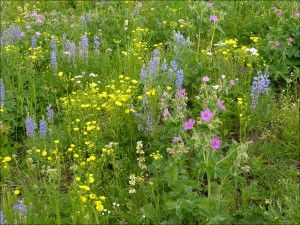
Native meadow grass

Native meadow grass

There’s a movement afoot in Henrico County to make it easier to grow grass. Not marijuana. Meadow grass.

Lawns are one of the banes of suburbia. They are biologically sterile, supporting very little wildlife. They require constant maintenance, including applications of fertilizer that washes into the watershed and cause algae blooms in the Chesapeake Bay and its major tributaries. They hold little water during a downpour, contributing to the problem of storm water management. Lawnmower engines are inefficient and contribute disproportionately to air pollution. As a society, we’d be better off without lawns. Just one little problem. Homeowners love them.

If people want to keep their lawns, that’s fine with me. But people who want to convert their lawns to prairie grass should be free to do so. Trouble is, they can’t. Suburban county ordinances require homeowners to cut their grass. Continue reading

Want to Combat Noise Pollution? Measure It

I’m a big fan of city life but I’m the first to acknowledge that there are drawbacks to crowding and congestion. The foremost of those is noise. Cities are noisier than the burbs and the countryside. The older I get (I’m 61 now), the larger the noise factor looms in my consideration of things. Even in suburbs, it doesn’t take much commotion to jangle my nerves. In the early morning birds can drive me crazy with all their chirping and cawing and twittering. As for children, don’t get me started. The noise-oblivious little monsters can be worse than freight trains. If it sounds like I’m turning into a cranky old man… yes, I believe that’s exactly what’s happening.

As a rule, cities are even noisier than the burbs. People are more densely packed in urban areas, so there are more people — more drunks, more wife beaters, more backyard dogs, more buses, more sirens, more jackhammers, more big, honking HVACs — generating sound waves within hearing distance. Cities also have more concrete and masonry that reflect sound and less in the way of trees, bushes and vegetative mass to dampen it. According to the World Health Organization (WHO), problems resulting from too much noise include poor work and school performance and even cardiovascular problems. Clearly, in the battle for livability, the noise factor favors suburbs, small towns and rural areas.

How does a city combat that disadvantage? Ordinances can limit excessive noise from construction, honking horns or barking dogs. Transportation officials can build sound walls along highways. Aside from such obvious measures, one useful place to start is to measure decibel levels to visualize where noise is the worst. Thanks to the increasing ubiquity of smart phones, the practice of noise mapping is spreading around the world. Continue reading

Heal Yourself on a Tennessee Trail

cummins_fallsby Rod Williams

Kathleen Williams is Founder and Executive Director of the Tennessee Parks and Greenways Foundation. TPGF has been responsible for saving numerous waterfalls, beautiful vistas, and critical habitats and helping place thousands of acres of land in conservation easements. I reported on the dedication of Cummins Falls in this blog in May of 2012.  Cummins Falls has got to be one of the most beautiful spots on earth. When I die, I think that is where I would like my ashes to be scattered.

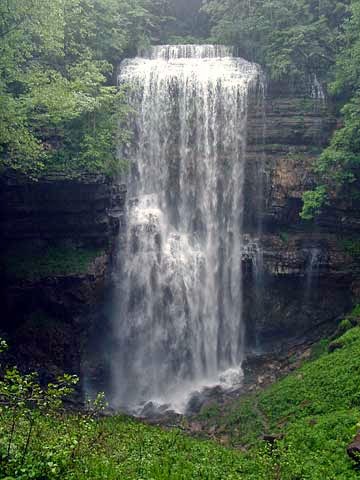
Virgin Falls

Since saving Cummins Falls, TPGF was instrumental in saving Virgin Falls, a water fall that falls out on one cave and into another. It is unique in that it has no upstream or downstream. Many people thought this fall was already protected but it was not. The State had a long-term lease on the property that was set to expire. The falls could have been lost to public use, it not for the work of TPGF.  I have never visited the falls myself but look forward to doing so.

Tennessee conservatives who love nature should get behind the work of TPGF. TPGF is privately funded and has no condemnation authority, or coercive authority of any kind, yet has saved many of Tennessee’s natural treasures. Kathleen Williams is my sister and I am extremely proud of the work she is doing. Continue reading

Putting the “Garden” in Rain Garden

wetlands

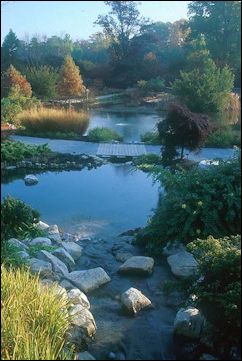
View of West Island Garden. Photo credit: Lewis Ginter Botanical Garden

This July Virginians will start spending billions to meet tough new storm-water regulations. Lewis Ginter Botanical Garden wants to demonstrate best practices that save the bay – and look really good doing it.

by James A. Bacon

About a decade ago the leadership of the Lewis Ginter Botanical Garden, an institution known mainly for its formal gardens and conservatory of exotic tropical plants, began re-defining its mission. The new vision called for showcasing how Richmonders and Virginians might address endemic environmental problems such as invasive species and pollution caused by storm water run-off. It was a hard sell at the time, and the 2007-2008 recession dried up traditional sources of philanthropic funding. For years the $9 million project stalled.

But the economy has improved, donations have picked up and the “Streams of Stewardship” vision couldn’t be more timely. The plan calls for reclaiming a stream running through the garden’s 80-acre property, replacing turf lawns with native meadow grasses and using rain gardens to reduce parking-lot run-off – exactly the kinds of things that Virginians will have to do to meet strict new water standards designed to clean up streams, rivers and the Chesapeake Bay. Continue reading

Virginia Air: Less than Pure but Pretty Darn Clean

particulatesby James A. Bacon

Ambient air pollution caused an estimated 3.7 million deaths worldwide in 2012, according to a recent report by the World Health Organization (WHO), while household air pollution, typically smoke from the use of coal, wood and dung in home cooking and heating, resulted in 4.3 million more.

There are four main categories of air pollution, including ozone, nitrogen dioxide and sulfur dioxide but the deadliest is particulate matter, a complex mix of solid and liquid particles. The deadliest of these are the smallest ones, 1o microns in diameter or less. In March WHO published a database tracking the levels of sub-10 micron particulates in the ambient air of 1,600 cities around the world.

The cleanest cities in the world (with the lowest levels of particulates) would come as no surprise to those who follow the political geography of environmentalism. For the most part, they are Nordic or English-speaking countries, with Iceland, Canada and Australia at the top. The United States ranks 15th in the world (tied with Norway and the Maldives) but U.S. cities vary considerably in the cleanliness of their air. Despite being downwind from coal-fired power plants, Virginia cities are cleaner than the U.S. average. They may not be up to Icelandic standards — the country runs on geothermal energy — but they’re Gardens of Eden compared to major cities in India, China and the country with the worst particulate pollution in the world, Pakistan.

To peruse the WHO database, click here. Continue reading

A Timely Reminder of the Anti-Agenda 21 Distraction

agenda21by James A. Bacon

Here in Virginia, the anti-Agenda 21 zealots have managed to stay out of the headlines for quite a while. I don’t know if that’s because they are quietly re-energizing themselves or if the movement is falling apart. But it never hurts to be reminded of the bizarre nature of this populist splinter group, which has done so much to obfuscate the issues surrounding growth and development in Virginia and distract from the task of articulating a positive, forward-thinking set of conservative principles to guide governance at the local-government level.

That reminder comes from a new report from the Southern Poverty Law Center, “Agenda 21: the U.N. Sustainability and Right-Wing Conspiracy Theory.” The report documents how the anti-Agenda 21 movement, which regards the Agenda 21 project of the United Nations as a radical environmentalist plot to deprive Americans of their property rights and way of life, has thrived on the paranoid fringe of conservative thought.

Lead author Heidi Beirich documents the spread of anti-Agenda thinking from its fountainhead, Tom DeWeese, head of the American Policy Center in Remington, Va., to the Constitution Party, the Constitutional Sheriffs and Peace Officers Association, the John Birch Society, neo-Nazis and all manner of obscure, grass-roots organizations. Many of these are groups that mainstream conservatives do not want to be associated with. Indeed, many are a downright embarrassment to conservatives, for their ideological affinity for small government allows liberals and progressives to paint the broader small-government movement as a collection of cranks and weirdos.

Nowhere is that dynamic more damaging, however, than the debate over Climate Change, the very issue that animates the anti-Agenda 21 populists, because an inordinate fear of global warming underpins many liberal/progressive initiatives in the realm of transportation, zoning and land use. Continue reading