Yes, I’m Talking about Kansas City

by Daniel Kay Hertz

In response to this post at The Atlantic Cities, a commenter objects:

[Y]our suggested remedies are housing subsidies, protections against evictions due to rising rents, and an end to caps on housing construction. In cities like Milwaukee or Kansas City (or St. Louis, Omaha, etc) those don’t match up with any problems in the local housing market.

The media’s obsession with gentrification to the exclusion of all other housing issues has a number of consequences, ranging from annoying to pernicious, but one of the worst is a widespread belief that New York, Washington, Chicago, San Francisco, and so on have one set of housing problems, and everybody else has a completely different set.

This is not, in fact, the case. In fact, nearly every metropolitan area in the country has these two problems: A) Zoning prohibits new construction in relatively nice neighborhoods, meaning prices are artificially high, which forces people either to live in less-nice neighborhoods with more crime, worse schools, etc., or build new houses on farm/desert land with worse access to the actual city, and B) A big chunk of people can’t actually afford to pay the market price for housing almost anywhere. This leads to problem C), which is economic segregation, which has various disastrous effects on the opportunities people have to lead the kinds of lives they would like to lead.

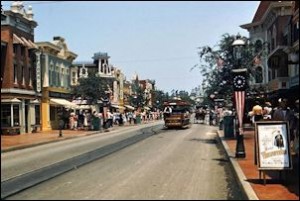
What is special about New York, Washington, etc., is the fact that the geography of their economic segregation is changing, and changing quite rapidly. But the underlying housing dynamics that cause segregation are quite similar. Remember that the vast majority of American neighborhoods where prices are higher than they should be as a result of restrictions on new building look much more like this:

hertz1

Continue reading

The Second Life Cycle

This is part of the ongoing conversation happening right now at the Memphis Boot Camp. 

by Charles Marohn

If a city like Memphis fails to make wise investments, it doesn’t go out of business. It simply stops doing the things it needs to do to support its people and it businesses. As a result, people suffer.

For cities, a public investment that builds wealth within the community can’t be evaluated over the short term. We must consider the multi-generational impact of the assets AND the obligations with everything we do.

(Cross posted from Strong Towns.)

Should Local Government Make a Profit?

by Charles Marohn

The very notion is abhorrent to think about. Of course government does not make a profit. Government is about serving people. It is about maintaining streets and parks. It is about job creation and economic development. Local governments should not be in the business of making a profit.

Profit is for companies like Wal-Mart. A company like Wal-Mart has revenues and expenses. Their revenues must exceed their expenses, an accounting term that is called “profit”. We are comfortable with this.

What about an orphanage? Should an organization that cares for abandoned children – the most vulnerable among us – be concerned with making a profit? They have revenues. They have expenses. For the orphanage to stay in business, their revenues need to exceed their expenses. The orphanage, in short, needs to make a profit.

Cities have revenues. Cities have expenses. If a city’s revenues do not exceed their expenses, a city doesn’t go out of business. No. What happens is that things go bad. And people get hurt. Continue reading

Planners Say Yes to Shockoe Bottom Condo

libbie_hill

View of the James from Libbie Hill Park. Pretty nice… if you don’t mind that grainery.

by James A. Bacon

Libbie Hill Park sits on the crest of a hill overlooking the James River. On that spot in 1737 William Byrd II famously looked upon the turn in the river, was struck by its resemblance to Richmond-upon-Thames outside London, and decided to give the new city founded nearby the name of Richmond. It is understandably a view that preservationists want to protect.

The-James-at-River-Bend-from-Cary-Street

View of The James at River Bend from Cary Street. Image credit CHPN.

But the Richmond Planning Commission approved Monday a special use permit to build a 16-story condominium building, The James at River Bend, just west of the view from Libby Hill Park. That decision follows approval earlier this month of an office complex on the eastern side of Libby Hill. Some conservationists are up in arms, and I sympathize. Some things are worth preserving. Yet I agree with the planning commission’s decision. Shockoe Bottom is an appropriate place for development at greater intensity. Continue reading

Horse Gone, Search Ensues to Find Out Who Should Have Closed the Door

barn_doorby James A. Bacon

A new question has arisen about the proposed $1.4 billion upgrade to U.S. 460 between Petersburg and Suffolk. Once the McDonnell administration ascertained that none of the three public-private partnership proposals on the table were viable and that the state would operate the road instead, why didn’t the Virginia Department of Transportation re-submit the construction project to competitive bidding? Why did the administration choose from among the three consortia that had submitted the original proposals?

“There is no doubt in my mind that this should have gone back out for new bids,” Del. S. Chris Jones, R-Suffolk, told the Times-Dispatch. “That would have been the prudent thing for the commonwealth.”

The House Appropriations Committee has summoned Aubrey Layne, who served on the Commonwealth Transportation Board under Governor Bob McDonnell and was elevated to Transportation Secretary by Governor Terry McAuliffe, to appear before the committee today to explain the decision-making process. The highway upgrade, touted as a boon to economic development in southern Hampton Roads when the Panama Canal widening opens, has been put on hold until the U.S. Army Corps of Engineers completes its assessment of the proposed route, which would disrupt hundreds of acres of wetlands.  The state has already paid $300 million under terms of the contract even though construction work yet to begin. Continue reading

Smart Growth for Custom-Minded Conservatives

main_streetby James A. Bacon

As I have endeavored to develop a conservative vision for Smart Growth, I have relied primarily upon conservative principles with a libertarian slant — limited government, fiscal conservatism, free markets and the like. But there is a vast realm of conservative thinking that I have neglected, which William S. Lind, director of the Arlington-based American Ideas Institute, has reminded me of in today’s post on the Center for Public Transportation blog.

In that post, Lind has kind words to say about Bacon’s Rebellion and our offshoot blog, Smart Growth for Conservatives. But he also expands the case for Smart Growth beyond the one that I have made: He appeals to the idea of conservatism that favors institutions that have grown up over time, as embodied in customs, traditions and habits. In the realm of land use planning, he invokes the golden age of American urbanism that reached its apex in the street car era before zoning codes mandated separation of where people lived from where they shopped or worked by distances too great to walk.

Traditional neighborhood development, Lind contends, fostered a sense of community — and community is a core conservative value. Community refers to informal arrangements in which citizens interact in the civic sphere, building bonds of trust, collaborating to achieve goals of mutual benefit and enforcing community norms without the need for government intervention. He writes:

Why do we desire community? Because traditional morals are better enforced by community pressure than by the clumsy and intrusive instrument of the law. But community pressure only works where there is community. If you do not know your neighbors, what do you care what they think? We want people to care what their neighbors think. Continue reading

Building a Strong Memphis

memphis2by Charles Marohn

Following World War II, Memphis embraced America’s new strategy for growth and prosperity intended to solve the most pressing social problem of the day: the poor condition of Memphis after decades of industrialization.

The new strategy was suburbanization. Relying on the automobile to facilitate growth by horizontally expanding the city, Memphis shifted away from the traditional pattern of neighborhood development and played its part in building the American Dream of large yards, easy driving, and free parking.

Suburbanization, sold as a way to cure blight and promote prosperity, was radically new and untested. It was also irresistible. Driven by federal programs and financial incentives, Memphis – like most American cities – built highways through the middle of the city, annexed property and extended public utilities outward.

In the process, core neighborhoods were destroyed and residents relocated to neighborhoods built in the new, experimental style. Streetcars were abandoned and the economic activity at the old stops shifted to new commercial corridors. Old buildings were torn down to provide parking and millions of tax dollars were spent widening streets to accommodate the automobiles now necessary for daily life. Continue reading